After reading Atonement and realizing what a strong writer McEwan was, I decided to pick up this brief novel after hearing a few positive things about it. The premise is interesting: Edward and Florence, both in their early twenties in the early sixties, marry after a brief year together. The novel opens on the eve of their wedding night, and both have their own concerns as to what is to happen. The novel can be summed up in one poignant line: "This is how the entire course of a life can be changed - by doing nothing." McEwan is a master at this; in fact, the book cover notes how he is a master at "lives transformed by a gesture not made or a word not spoken." It makes his writing eerily pertinent to lives of readers who have, I am almost certain, made such mistakes themselves and then have come to regret them.
Friday, July 4, 2008
Page Twenty-Three
After reading Atonement and realizing what a strong writer McEwan was, I decided to pick up this brief novel after hearing a few positive things about it. The premise is interesting: Edward and Florence, both in their early twenties in the early sixties, marry after a brief year together. The novel opens on the eve of their wedding night, and both have their own concerns as to what is to happen. The novel can be summed up in one poignant line: "This is how the entire course of a life can be changed - by doing nothing." McEwan is a master at this; in fact, the book cover notes how he is a master at "lives transformed by a gesture not made or a word not spoken." It makes his writing eerily pertinent to lives of readers who have, I am almost certain, made such mistakes themselves and then have come to regret them.
Monday, June 30, 2008
Page Twenty-Two
Sibyl Danforth, a midwife in Vermont who only performs home births, makes a rash decision to perform an emergency C-section on Charlotte Bedford in order to save the life of her baby, after she believes Charlotte died in childbirth. The question is was Charlotte really dead? This question makes up the majority of the book, which is narrated by Sibyl's daughter, Connie, looking back to her 14-year old self and following the events of the trial that would decide her mother, and her family's, fate. The question is never fully answered, but I think the author allows readers to make up their own mind, based mostly on the pieces of Sibyl's journal we are allowed access to.
I enjoyed reading this book - it kept me interested, and Bohjalian keeps the reader dangling by a thread throughout the whole trial, using flashforwards and flashbacks to keep us wondering if Sibyl will be convicted or not. Yet, my response to the book was that it is not a must-read, but a pleasure read for a languid summer day.
Wednesday, January 2, 2008
Page Twenty-One
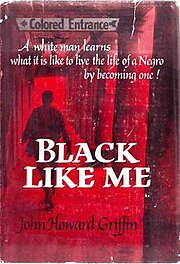
In 1959, journalist John Howard Griffin decided to find out what it was like for a black man living in the South. To do this, he took medication to darken his skin, exposed himself to ultraviolet rays, and applied a dark skin stain, and set out on a 7-week journey to different areas, including Mississippi, Alabama, and New Orleans. His first-hand account exposes the racist practices of the time, and leaves the reader feeling ashamed and disgusted.
Monday, December 31, 2007
Page Twenty
The book begins in 1935, England. 13-year old Briony Tallis has a very vivid imagination, which is revealed in the short plays she writes to perform for her family. Briony reads a letter meant for her older sister, Cecilia, from Robbie, the son of the Tallis' servant, and also witnesses an encounter between the two of them. Her overactive imagination and misunderstanding of the situation sets in motion an accusation that unravels the Tallis family and changes the lives of everyone involved. The book moves forward five years into WWII, and then jumps ahead to 1999 briefly at the novel's conclusion.
This book is a nice challenge, because, to me, it is reminiscent of Virginia Woolf's writing. But readers beware: this book is also completely heartbreaking.
Wednesday, December 26, 2007
Page Nineteen
The Book of Negroes by Lawrence Hill
This book follows the life of Aminata Diallo. It begins in her small village in West Africa when she was abducted at age 11 and forced to walk for months, naked and in a coffle, to a slave ship bound for the US. She is sold as a slave to an owner of an indigo plantation in South Carolina. The book follows her life from there to Charles Town, to New York, to Nova Scotia - as she becomes one of the many black Loyalists whose name was penned in The Book of Negroes - to Sierra Leone on the back-to-Africa exodus, and finally to London.
A must read for any lover of historical fiction.
This book follows the life of Aminata Diallo. It begins in her small village in West Africa when she was abducted at age 11 and forced to walk for months, naked and in a coffle, to a slave ship bound for the US. She is sold as a slave to an owner of an indigo plantation in South Carolina. The book follows her life from there to Charles Town, to New York, to Nova Scotia - as she becomes one of the many black Loyalists whose name was penned in The Book of Negroes - to Sierra Leone on the back-to-Africa exodus, and finally to London.
A must read for any lover of historical fiction.
Saturday, September 22, 2007
Page Eighteen
A Thousand Splendid Suns by Khaled Hosseini
I read Hosseini's The Kite Runner a couple of years ago; it was a very powerful book. When I heard his new novel was released this year, I knew I had to read it. A Thousand Splendid Suns may not deliver the same "literary punch" as The Kite Runner, but it's definately a book that will give you pause. This book deals with the women of Afghanistan and what they had to endure living under Taliban rule. Reading about what these women had to endure makes me feel an overwhelming sense of appreciation for having been spared a life of such unspeakable attrocities. I feel sick to my stomach even thinking that people lived and are living with anything even close to what the two protagonists of this novel had to live with. On the other hand, I think the past several years have made Afghanistan out to be a place solely of war, death, and tyranny, but Hosseini also draws attention to the fact that it was, and can be, a lovely place.
This is a sad read, but there are many moments of triumph and beauty as well.
I read Hosseini's The Kite Runner a couple of years ago; it was a very powerful book. When I heard his new novel was released this year, I knew I had to read it. A Thousand Splendid Suns may not deliver the same "literary punch" as The Kite Runner, but it's definately a book that will give you pause. This book deals with the women of Afghanistan and what they had to endure living under Taliban rule. Reading about what these women had to endure makes me feel an overwhelming sense of appreciation for having been spared a life of such unspeakable attrocities. I feel sick to my stomach even thinking that people lived and are living with anything even close to what the two protagonists of this novel had to live with. On the other hand, I think the past several years have made Afghanistan out to be a place solely of war, death, and tyranny, but Hosseini also draws attention to the fact that it was, and can be, a lovely place.
This is a sad read, but there are many moments of triumph and beauty as well.
Wednesday, September 19, 2007
Page Seventeen
This books grabs you from the first paragraph where Ruth describes how Buster, the main protagonist of the story, drops a lit match while in bed and catches on fire as his parents try to save him. The book chronicles Buster's emotional recovery from the incident as he has to learn how to rejoin his small Southern Ontario community as someone phyically different. To help him, he has the support of the elderly town doctor, Dr. Gray, a man who spins yarns about the Purple Gang from the 1930s in order to keep Buster focussed on something other than his physical scars and emotional detachment. It was during these excerpts where Ruth lost me a bit, but the main plot of the story reads fairly smooth and she gives you quite the interesting revelation at the end of the book.
This book was the "One Book, One Community" read for this summer. Currently, the author is traveling around Southern Ontario and I will have the chance to chat with her next week.
Subscribe to:
Posts (Atom)